








Every business owner has asked the same question at some point: “Is my marketing actually making me money?” You pay for ads, a website, social media and content, but the results can feel hard to pin down. Traffic goes up, followers grow, and yet the bank account doesn’t always reflect it.
The good news is that digital marketing is one of the most measurable ways to promote a business. Unlike a billboard or a radio spot, nearly every click, call and form submission can be tracked. You just need to know what to measure, how to calculate it and how to avoid the common traps.
This guide walks you through the whole process in plain language. You’ll learn what ROI really means, the formulas that matter, how to set up tracking, how to handle attribution and how to improve your returns over time.
What Is Good ROI for Digital Marketing?
There is no single number that fits every business, because margins, industries and channels differ. Many businesses aim for a return that comfortably covers all costs and leaves healthy profit.
A common benchmark for paid ads is a ROAST of around 4:1, and for customer economics an LTV to CACAO ratio of about 3:1. Treat these as starting points, then compare against your own margins and past performance.
What Is Digital Marketing ROI?
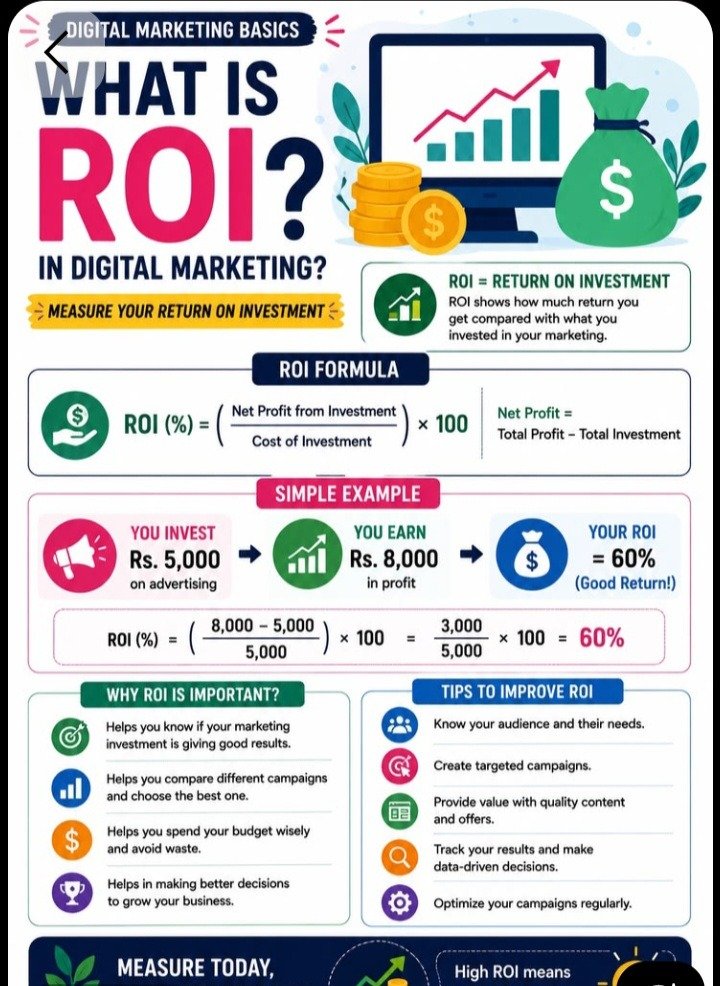
ROI stands for return on investment. In digital marketing, it tells you how much revenue or profit your marketing efforts generate compared with what you spent on them.
If you spend $1,000 on a campaign and it brings in $4,000 in sales, you have earned back your spend and more. If it brings in $700, you have lost money on that campaign. ROI gives you a clear way to tell the difference.
It matters because marketing is an investment, not an expense. Without measuring ROI, you are guessing which channels deserve more budget and which should be cut. With it, you can make confident decisions, defend your spending and scale what works.
If you’re still building your foundation, start with this complete guide to digital marketing for small business owners. It explains the channels you’ll be measuring.
Why Measuring ROI Is Harder Than It Looks
On paper, ROI is simple. In practice, a few things make it tricky.
Customers rarely buy after one click. Someone might see your Instagram ad, read a blog post a week later, click a Google ad, and finally buy after receiving an email. Which channel gets the credit?
Some channels work slowly. SEO and content marketing build value over months, not days. Judging them after three weeks gives you a misleading picture.
Some value is indirect. Brand awareness, trust and word of mouth are real but difficult to attach to a dollar figure.
Costs are often under-counted. Many owners only count ad spend and forget agency fees, software subscriptions, creative production and staff time.
None of these problems are unsolvable. They just mean you need a structured approach rather than a quick glance at a dashboard.
How Long Does It Take To See ROI From Digital Marketing?
It depends on the channel. Paid advertising and email can show results within days or weeks. SEO and content marketing usually take several months to build momentum, but they often deliver lasting returns. Judge each channel against its natural timeline rather than expecting everything to pay off at once.
Step 1: Set Clear Business Goals First
You cannot measure return if you haven’t defined what “return” means for your business. Before you look at any numbers, decide what success looks like.
Common goals include:
● Generating more qualified leads
Increasing online sales
● Booking more appointments or calls
● Reducing the cost of acquiring each customer
● Growing repeat purchases
Your goal should be tied to revenue, not just activity. “Get 10,000 followers” is a vanity target. “Generate 40 qualified leads per month at under $50 each” is a business goal you can measure.
Write down a specific target, a time frame and a budget. If you need a framework for this, Moreed’s guide on building a digital marketing strategy from scratch walks through setting goals before you spend a cent.
Step 2: Calculate Your True Marketing Costs
An accurate ROI depends on an accurate cost figure. Include everything you invest, not only the obvious items.
● Ad spend: Google Ads, Meta Ads, TikTok, LinkedIn and so on
● Agency or freelancer fees: monthly retainers or project costs
● Software and tools: analytics platforms, email software, CRM, SEO tools
● Content production: copywriting, design, photography and video
● Internal time: the hours your own team spends on marketing
That last item is often skipped, but if you or an employee spends ten hours a week on marketing, that time has a cost. Leaving it out makes your ROI look better than it really is.
Not sure what a sensible budget looks like? This breakdown of digital marketing budgets at every business stage is a helpful reference, even if your market differs from Nigeria, because the stage-based logic applies broadly.
What Is The Difference Between ROI and ROAST?
ROAST measures the revenue earned for every dollar spent on advertising only. ROI is broader: it compares total profit or revenue against all marketing costs, including agency fees, tools, creative and staff time.
ROAST is handy for quick campaign checks, while ROI gives a more complete picture of profitability.
Step 3: Learn The Core ROI Formulas
You don’t need advanced math. A handful of formulas cover most situations.
The Basic Marketing ROI Formula
ROI (%) = (Revenue from marketing − Marketing cost) ÷ Marketing cost × 100
Example: You spend $2,000 on a campaign that generates $8,000 in sales.
($8,000 − $2,000) ÷ $2,000 × 100 = 300% ROI
A positive number means you earned more than you spent. A negative number means you lost money.
Many marketers use gross profit instead of revenue for a more honest picture, because revenue doesn’t account for the cost of delivering your product or service. If your margins are thin, this is the better version to use.
Return on Ad Spend (ROAS)
ROAST = Revenue from ads ÷ Ad spend
Example: $5,000 in revenue from $1,000 in ads gives a ROAST of 5, often written as 5:1 or 5x.
ROAS is useful for judging individual ad campaigns quickly. The catch is that it ignores costs beyond the ad budget, so it can make a campaign look healthier than it is.
Customer Acquisition Cost (CAC)
CACAO = Total marketing and sales cost ÷ Number of new customers
Example: You spend $6,000 in a month and win 30 new customers. Your CAC is $200.
CAC tells you what it costs to win one customer. By itself, it means little, so you have to compare it with what that customer is worth.
Customer Lifetime Value (LTV)
LTV = Average order value × Purchase frequency × Customer lifespan
If a customer spends $100 per order, buys four times a year and stays for three years, the LTV is $1,200.
The LTV to CAC Ratio
Comparing LTV with CAC shows whether your growth is sustainable. A commonly used rule of thumb is a ratio of around 3:1, meaning a customer is worth about three times what it cost to acquire them. Your ideal number depends on your margins and cash flow, but a ratio below 1:1 means you are paying more to win customers than they ever return.
Payback Period
Payback period = CACAO ÷ Monthly gross profit per customer
This tells you how many months it takes to earn back the cost of acquiring a customer. Shorter is better, especially for businesses with limited cash.
Step 4: Set Up Proper Tracking
Formulas are only as good as the data behind them. If you can’t tell where your leads and sales come from, you can’t calculate ROI. Here is the tracking foundation every business needs.
Install Google Analytics 4 and Define Key Events
Google Analytics 4 (GA4) is the standard free tool for understanding website behavior. The most important thing to do is tell it which actions matter to your business: a purchase, a form submission, a booking, or a phone call click. In GA4 these are called key events, formerly known as conversions. Google explains how to mark events as key events in its official help guide.
Be selective. If you mark every page view or scroll as a key event, your numbers become meaningless. Track only the actions that signal real business value.
Use UTMOST Parameters on Every Campaign Link
UTMOST tags are small snippets added to the end of a URL that tell your analytics exactly where a visitor came from. For example, you can label a link by source (newsletter), medium (email) and campaign (spring-sale). Without them, a lot of traffic ends up lumped into vague categories like “direct,” and you lose the ability to credit the right channel.
Track Phone Calls and Offline Conversions
Many service businesses get their best leads by phone or in person. Use call tracking numbers, ask new customers “How did you hear about us?” and record the answer in your CRM. This closes the gap between online activity and offline sales.
Connect Your CRM
A CRM (customer relationship management) system links each lead to the marketing source that produced it and to the revenue it eventually generated. This is what lets you say, “Leads from Google Ads closed at 22% and averaged $3,500 per sale,” rather than guessing.
Step 5: Understand Attribution
Attribution is the method used to assign credit to the marketing touchpoints that lead to a sale. Since customers interact with several channels before buying, the model you choose changes how each channel looks.
● First-touch attribution gives all credit to the first interaction. It favors awareness channels like social media and SEO.
● Last-touch attribution gives all credit to the final interaction before purchase. It favors channels like paid search and email.
● Linear attribution splits credit equally across all touchpoints.
● Data-driven attribution uses algorithms to weigh each touchpoint based on its actual influence on conversions.
No model is perfect. The practical approach for most small and mid-sized businesses is to look at more than one view. If a channel looks weak under last-touch but strong under first-touch, it may be introducing customers who another channel then closes. Cutting it could quietly hurt your results.
A simple extra check is to ask customers directly. A “How did you find us?” field on your forms often reveals sources that analytics can’t see, such as podcasts, referrals, and social media shares.
How Do I Measure ROI If Customers Buy Offline or By Phone?
Use call tracking numbers, add a “How did you hear about us?” question to forms and phone scripts, and record the answers in your CRM. You can also use unique promo codes or landing pages for specific campaigns. These methods link offline sales back to the digital activity that influenced them.
Step 6: Measure ROI Channel by Channel
Different channels behave differently, so judge each one by the right yardstick and the right time frame.
Paid Advertising (Google Ads, Meta Ads, TikTok)
Paid channels deliver the fastest feedback. Track cost per click, conversion rate, cost per lead, CACAO and ROAST. You can usually judge performance within weeks, though you should give each campaign enough data and a learning period before making big changes.
SEO and Organic Search
SEO is a long game. Track organic traffic, keyword rankings, organic leads and the revenue from those leads. Because results compound slowly, judge it over months rather than weeks. This realistic timeline for how long SEO takes to work will help you set sensible expectations, and this explanation of why small businesses need SEO covers the business case for investing in it.
Email Marketing
Email is often the highest-ROI channel because the cost per send is low. Track open rate, click rate, conversion rate and revenue per email. Compare the revenue from a campaign against the time, software and creative cost behind it.
Social Media
Social media supports both awareness and sales. For organic social, track reach, engagement and, most importantly, the clicks and leads that come from it. For paid social, treat it like any other ad channel and measure cost per lead and ROAST.
Content Marketing
Content works over time by attracting search traffic and building trust. Measure traffic to each piece, leads or sign-ups it generates and the assisted conversions it contributes to. For a useful walkthrough of tying content spending to revenue, see HubSpot’s guide to measuring content marketing ROI.
Step 7: Track the Right KPIs (and Ignore the Wrong Ones)
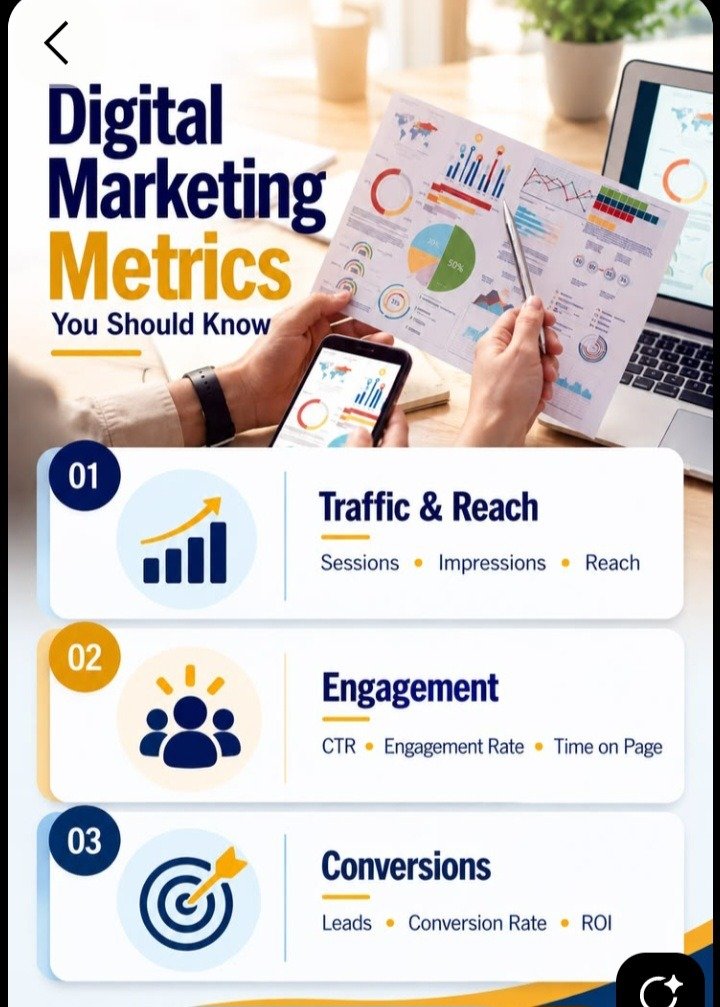
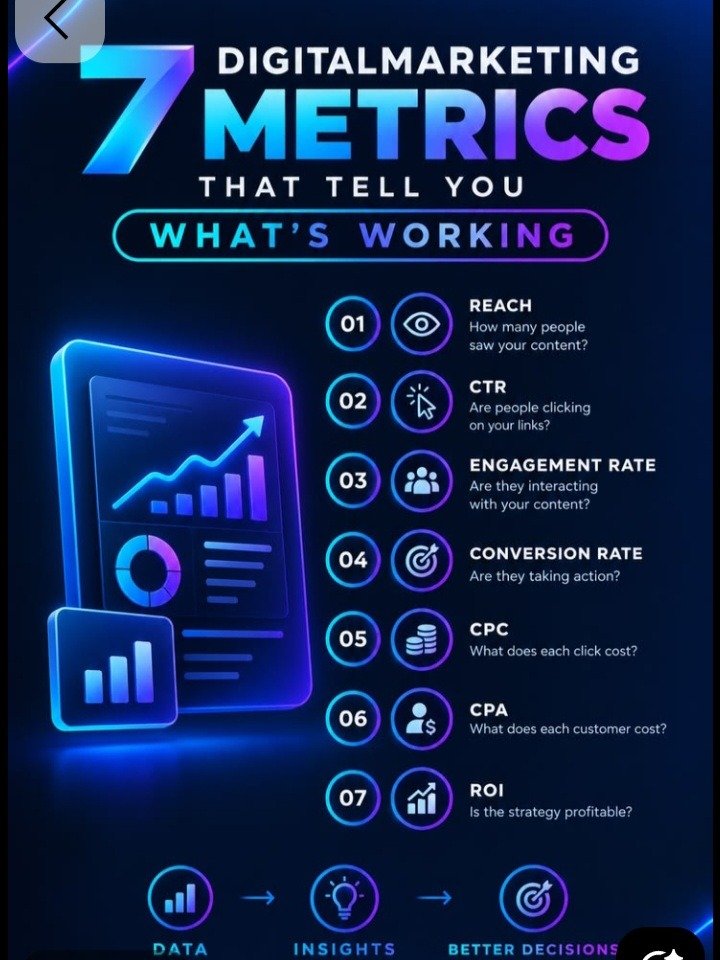
Key performance indicators, or KPIs, are the numbers that tell you whether you’re on track. Focus on metrics connected to revenue.
Metrics worth tracking:
● Qualified leads generated
● Conversion rate (visitors to leads, leads to customers)
● Cost per lead and cost per acquisition
● Revenue and gross profit by channel
● Customer lifetime value
● Return on ad spend
● Payback period
Metrics that can mislead you on their own:
● Followers and likes
● Impressions and raw reach
● Total website traffic without context
● Email list size without engagement
Vanity metrics aren’t useless. They can signal early momentum. But they are not ROI, and they shouldn’t be the number you report to yourself or your team as proof of success.
Step 8: Allow For The Right Time Frame
One of the biggest mistakes in ROI measurement is judging a channel too soon or too harshly.
Paid ads can show results in days or weeks. Email can show results quickly if you already have a list. SEO and content often take several months before they begin to pay off, but they tend to keep delivering after you stop spending, which can make their long-term ROI very attractive.
Set review points that match each channel’s natural speed. A monthly review works for most activity, with a deeper quarterly review to compare channels and adjust the budget.
A Worked Example
Let’s put it together with a simple scenario. A local home-services company spends the following in a month:
● Google Ads: $2,000
● Agency management fee: $1,000
● Tools and call tracking: $200
● Creative and landing page updates: $300
Total cost: $3,500
The campaign produces 40 leads. The sales team closes 10 of them at an average job value of $1,800, giving $18,000 in revenue. Suppose the gross margin is 50%, so gross profit is $9,000.
● ROAST (ads only): $18,000 ÷ $2,000 = 9x
● Revenue ROI: ($18,000 − $3,500) ÷ $3,500 × 100 = about 414%
● Profit ROI: ($9,000 − $3,500) ÷ $3,500 × 100 = about 157%
● Cost per lead: $3,500 ÷ 40 = $87.50
● CACAO: $3,500 ÷ 10 = $350
The ROAST of 9x looks fantastic, but the profit-based ROI of roughly 157% is the more honest figure. It’s still strong, but it’s a very different story from the headline number. That is why counting all costs and using gross profit matters.
How To Improve Your Digital Marketing ROI
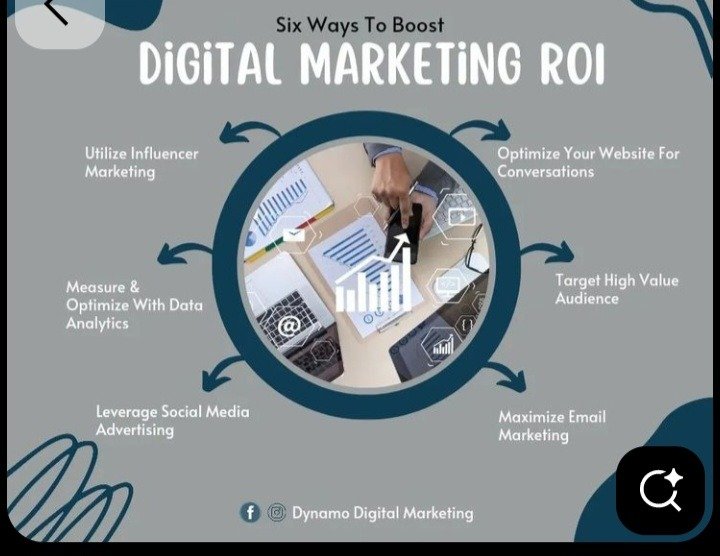
Once you’re measuring properly, you can start improving. ROI rises when you either increase returns or reduce costs. These are the most reliable levers.
1. Improve your conversion rate. Getting more value from existing traffic is usually cheaper than buying more. Faster page speed, clearer calls to action, stronger offers, simpler forms and better mobile experience all help.
2. Double down on what works. Shift budget from low-performing channels to the ones producing the best return. Review this at least quarterly.
3. Refine your targeting. Narrow audiences, add negative keywords in paid search and focus on buyers with real purchase intent rather than broad, curious traffic.
4. Increase customer lifetime value. Up sells, loyalty offers, subscriptions and follow-up emails raise the value of each customer, which improves your LTV to CACAO ratio without raising acquisition costs.
5. Test continuously. A/B test headlines, ad creative, landing pages and email subject lines. Small gains compound over time.
6. Fix the leaks in your sales process. Marketing ROI suffers when leads aren’t followed up quickly. A fast response time can raise your close rate more than additional ad spend would.
7. Consider expert help where it makes sense. If you lack the time or skills, an agency or freelancer can speed things up, but the choice should be judged on return as well. This comparison of a digital marketing agency versus a freelancer breaks down cost, skills and risk so you can decide what fits your business.
Which Tools Do I Need To Track Digital Marketing ROI?
At minimum, use Google Analytics 4 for website behavior, UTMOST parameters to label your campaign links and a CRM to connect leads to revenue. Add call tracking if you get many phone inquiries, and use the reporting tools built into your ad platforms for campaign-level data.
Common Mistakes To Avoid
● Measuring without goals. Data without a target gives you numbers but no direction.
Ignoring total cost. Counting only ad spend inflates your results.
● Relying on one attribution model. Look at several views before cutting a channel.
● Quitting SEO or content too early. These channels need time.
● Chasing vanity metrics. Likes don’t pay your bills.
● Not tracking offline conversions. Phone calls and in-person sales are often your best leads.
Setting up tracking once and forgetting it. Tags break, forms change and campaigns multiply. Audit your tracking regularly.
Should I Measure ROI Using Revenue or Profit?
Profit gives a more accurate picture because revenue ignores the cost of delivering your product or service. Revenue-based ROI is easier to calculate and fine for quick comparisons, but if your margins are tight, always check profit-based ROI before scaling spend.
Final Thoughts
Measuring the ROI of digital marketing doesn’t require a data science degree. It requires clarity about your goals, honesty about your costs, reliable tracking and the patience to judge each channel on its own timeline.
Start simple. Define one or two business goals, set up GA4 key events and UTMOST tags, connect your leads to revenue and calculate your ROI monthly. As your data grows, layer in customer lifetime value, attribution and channel-level analysis.
The businesses that grow fastest aren’t necessarily the ones that spend the most. They’re the ones that know exactly what their money is doing, and keep investing where it works.