







If you’ve typed “how much does digital marketing cost” into Google and walked away more confused than when you started, you’re not alone. One agency quotes $800 a month. Another quotes $8,000. A third wants 15% of your ad spend plus a $2,500 retainer. They all call themselves “full-service.”
The honest answer is that digital marketing pricing in 2026 typically ranges from $1,500 to $10,000+ per month for small and mid-sized businesses, with enterprise programs climbing well past $30,000 a month.
Where you land inside that range depends on your industry, your goals, which channels you use, and whether you hire a freelancer, a boutique shop, or a full-service agency.
This guide breaks down real digital marketing agency cost data by service, business size, and pricing model, so you can build a budget instead of guessing at one.
Quick Answer: Average Digital Marketing Costs In 2026
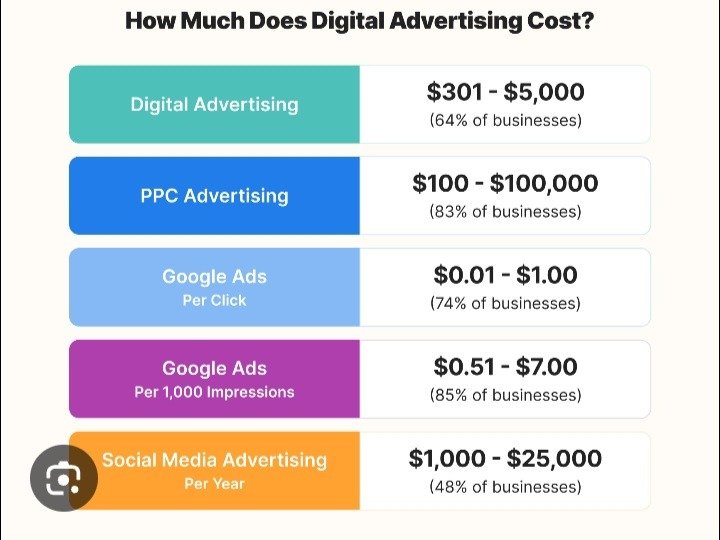
These figures cover management fees and strategy work. Ad spend, software subscriptions, and content production are usually billed separately, which is one of the biggest reasons two “digital marketing” quotes can look wildly different even when the scope sounds identical.
How Much Should A Small Business Spend On Digital Marketing Per Month?
Most small businesses spend between $1,500 and $7,500 per month, depending on how many channels they run and how competitive their market is.
Businesses just starting out can often see traction with a focused $1,500–$3,000 budget concentrated on one or two channels rather than spreading thin across everything at once.
Digital Marketing Pricing Models Explained
Before comparing numbers, it helps to understand how agencies charge, because the pricing model affects your total cost as much as the services themselves.
● Monthly retainer: The most common structure for ongoing work. You pay a fixed monthly fee, generally $1,000 to $20,000, for a defined scope of strategy, execution, and reporting.
Retainers give you predictable budgeting and priority access to your team, but usually require a 3–12 month commitment.
● Project-based pricing: Best for one-off deliverables like a website redesign, a brand refresh, or a single campaign launch. Projects generally run $2,500 to $30,000+ depending on complexity, with no ongoing commitment once the work is delivered.
● Hourly rates: Common for freelancers and specialized consultants, typically $50 to $200 per hour for generalists and $120 to $250+ per hour for senior specialists. Hourly billing works well for smaller, well-defined tasks but can become unpredictable for open-ended strategy work.
● Performance-based pricing: Some agencies charge a percentage of ad spend (commonly 10–20%) or tie fees to results like leads or revenue. This aligns incentives but is usually reserved for paid media management rather than full-service marketing.
Most agencies, including full-service partners like Stratvora, blend a monthly retainer with transparent, separately itemized ad spend so clients always know exactly where their money is going.
Is Digital Marketing Worth The Cost?
For most businesses, yes, digital marketing typically delivers measurable, trackable ROI that traditional advertising can’t match, since every click, lead, and conversion can be attributed to a specific channel or campaign.
The key is matching your budget to realistic timelines; SEO and content compound over months, while paid ads can show results within weeks.
Digital Marketing Agency Cost by Business Size
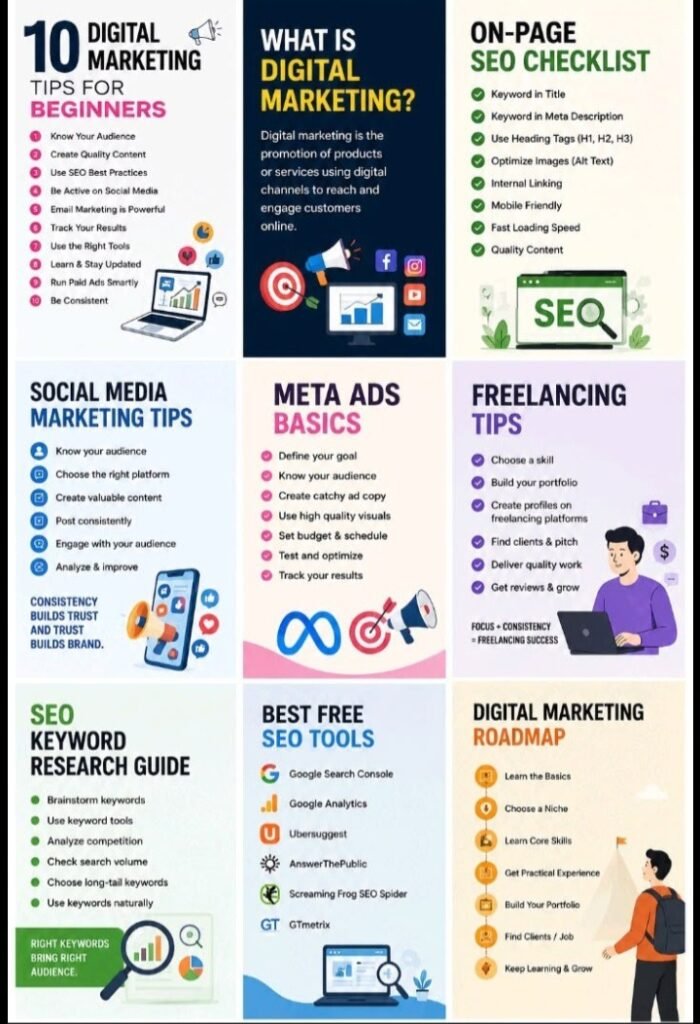
Company size and growth stage are the single biggest drivers of digital marketing pricing, because they determine how much competition you’re up against and how much execution work is required each month.
Micro and local businesses (single-location service businesses, solo practitioners) typically spend around $400 to $1,500 per month. At this tier, budgets usually cover local SEO, Google Business Profile management, and light social media activity.
Small businesses average $1,500 to $7,500 per month. This is where most companies land once they add a real SEO strategy, consistent content, and paid ads on top of the basics.
Mid-market companies move into the $7,500 to $20,000 per month range, often running multiple paid channels simultaneously alongside more aggressive content and link-building programs.
Enterprise and national brands frequently spend $20,000 to $80,000+ per month, reflecting multiple agencies or in-house teams, always-on optimization, and highly competitive keyword targets.
If you’re a small business trying to figure out where you fit, our guide on what digital marketing actually includes for small business owners walks through how to prioritize channels before you commit to a budget.
Full Digital Marketing Pricing Breakdown by Service
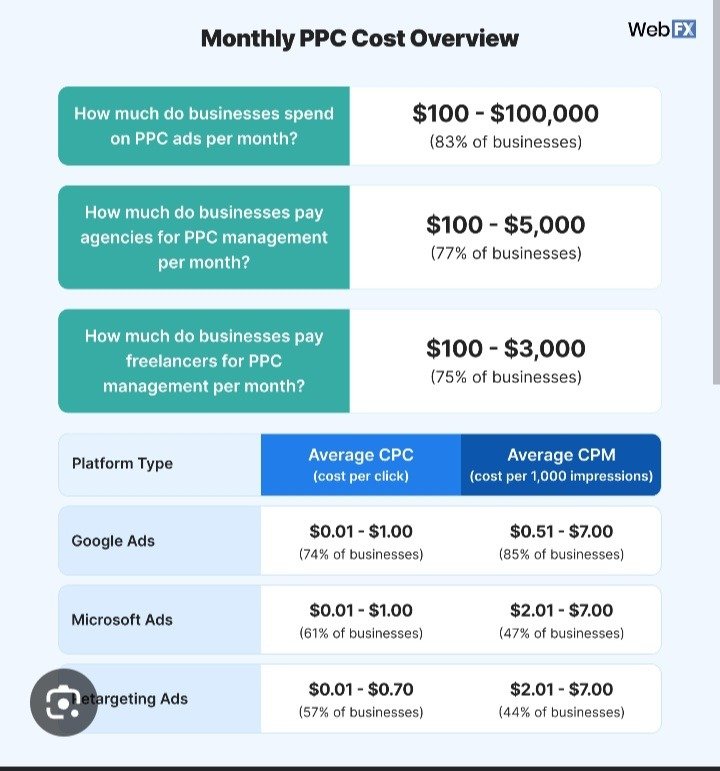
This is the part most pricing guides gloss over. Here’s what each core service actually costs in 2026.
SEO Pricing
Search engine optimization typically costs $1,500 to $10,000 per month, with most small and mid-sized businesses landing between $1,500 and $5,000. Highly competitive national keywords can push costs past $10,000 monthly.
SEO pricing depends on your current site health, how competitive your industry is, and whether you need technical fixes, content production, and link building all at once. Because SEO compounds over time rather than delivering instant results, it’s worth understanding how long SEO actually takes to show measurable results before comparing quotes on cost alone. For businesses just getting oriented, this breakdown of what SEO is and why small businesses need it is a useful starting point.
PPC And Paid Advertising Management
Pay-per-click management is usually priced as 10–20% of your ad spend, often with a minimum monthly management fee around $1,500 to $2,500. Note that this fee is separate from what you actually spend on Google Ads, Meta Ads, or other platforms, a common source of “hidden cost” confusion when comparing agency proposals.
Social Media Marketing
Social media management runs $500 to $7,000 per month for most small and mid-sized businesses, covering content creation, scheduling, community management, and reporting across two to four platforms. Adding paid social campaigns on top of organic management increases the total. Businesses building a social presence from scratch may find it helpful to see how a complete social media playbook is structured for growth, including platform selection and content cadence.
Content Marketing
Content marketing pricing ranges from $2,000 to $20,000 per month, depending on volume and production quality. A lean package of four to six blog posts a month typically starts around $1,500–$3,000, while full-service programs with original research, video, and active distribution can reach $6,000 or more. A well-built content strategy built around conversion, not just publishing volume tends to justify the higher end of that range.
Email Marketing
Email marketing typically costs $300 to $2,500 per month, covering campaign design, list segmentation, and automation. One-time automation build-outs (welcome series, abandoned cart flows) are usually billed separately as a project, often $2,000–$8,000 depending on complexity.
Website Design And Development
A professional, conversion-focused business website typically costs $3,000 to $20,000 as a one-time project, though enterprise builds can exceed $100,000. Ongoing hosting, maintenance, and security typically add $100–$500 per month.
Since your website is the foundation every other channel drives traffic to, it’s often the first place to invest before scaling paid ads. Stratvora’s website design and development services fold hosting, maintenance, and core SEO setup into most engagements rather than pricing them as separate line items.
Link Building
Link building sits at the higher end of SEO pricing, often averaging $60,000 per year or roughly $5,000–$10,000 per month for authority-focused campaigns, since it depends heavily on outreach volume and the quality of sites securing the links.
How Much Does A Digital Marketing Agency Charge Per Month On Average?
Digital marketing agency cost typically falls between $1,500 and $10,000 per month for small and mid-sized businesses, with a commonly cited median retainer around $3,000.
Enterprise engagements with multiple channels and dedicated teams often exceed $20,000 monthly.
How AI Is Changing Digital Marketing Pricing In 2026
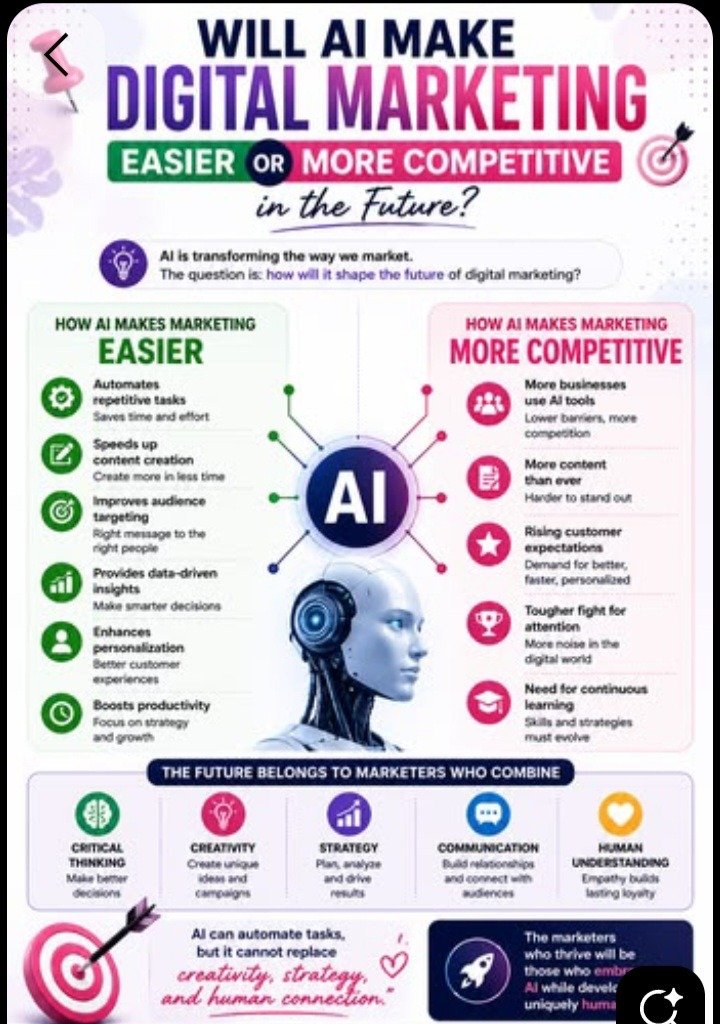
AI tools have reshaped how agencies price and deliver work over the past two years. Tasks that once required hours of manual effort first draft copywriting, ad variation testing, reporting dashboards are now partially automated, which has pushed some agencies toward more transparent, output-based pricing instead of pure hourly billing. At the same time, a newer cost has entered the conversation:
AI search optimization, sometimes called AEO or GEO, which focuses on getting a business cited in AI-generated answers from tools like ChatGPT and Google’s AI Overviews rather than just ranking in traditional blue links.
Businesses evaluating this shift may find it useful to see how companies outside the US are approaching AI-driven marketing budgets, since the underlying pricing pressure of doing more with a smaller execution budget is a global trend, not a regional one. Expect AI search visibility to become a standard line item in digital marketing pricing over the next year, often bundled into SEO retainers rather than sold separately.
Do Digital Marketing Agencies Charge Extra For Ad Spend?
Yes, in almost all cases. Management fees, what you pay the agency, and ad spend (what you pay platforms like Google or Meta) are billed separately.
A $2,500/month management fee on top of $3,000 in ad spend means a total monthly investment of $5,500, not $2,500.
What Actually Affects Digital Marketing Pricing
Beyond service type, a handful of factors move your quote up or down:
● Industry competitiveness: Law firms, medical practices, and finance companies pay more because keyword and ad auction competition is fiercer.
● Agency size and location: Boutique agencies may charge $1,500/month for SEO while enterprise firms charge $15,000+ for comparable scope. The gap reflects overhead and client size expectations more than raw quality.
● Geographic market: National and multi-location campaigns cost more than single-market local campaigns.
● Scope of channels: Bundling SEO, paid ads, content, and social under one partner is usually more cost-efficient than hiring separate vendors for each.
● Reporting and strategy depth: Agencies that provide dedicated strategists and monthly performance reviews typically charge more than those offering templated deliverables.
● Startup stage: Early-stage companies often need a leaner, more experimental budget before scaling spend once channels prove out a point covered well in this guide to digital marketing strategy for startups.
Agency vs. Freelancer vs. In-House: Cost Comparison
Freelancers are the cheapest entry point, typically $50–$200 per hour or $300–$1,500 per month for bundled packages. You get flexibility and lower cost, but usually only one person handles strategy, execution, and reporting which limits how many channels can be run well at once.
Agencies cost more upfront ($1,500–$20,000+ per month) but bring a full team: strategists, designers, copywriters, and paid media specialists working from a shared strategy.
This is usually the better value once you’re running more than one or two channels simultaneously, since you’re paying for coordinated execution rather than a single generalist’s time.
In-house teams carry the highest true cost once you account for salary, benefits, software licenses, and training, often $8,000–$15,000+ per month for even a lean two-person team, before ad spend.
In-house makes sense at scale, but most small and mid-sized businesses get more channel coverage per dollar from an agency retainer.
Businesses weighing this decision, especially newer companies, often benefit from comparing where to find the right marketing help at each growth stage before locking into a long-term hire.
Is It Cheaper To Hire A Freelancer Or An Agency?
A freelancer is cheaper hourly, but an agency is usually more cost-efficient once you need more than one channel managed well, since you’re getting a coordinated team instead of one person splitting time across strategy, design, and execution.
How Much Should You Budget For Digital Marketing?
A commonly cited benchmark, drawn from Gartner’s CMO Spend research, is that companies allocate roughly 7–8% of revenue to marketing on average, with high-growth companies investing 15–20%+ to accelerate expansion.
If you’re a $1M revenue business, that translates to roughly $70,000–$80,000 a year, or $5,800–$6,600 a month, spread across channels and ad spend combined.
If a firm percentage feels abstract, a simpler starting rule works for most small businesses: budget enough to run one core channel (usually SEO or paid search) consistently for at least six months rather than spreading a small budget across five channels and seeing meaningful traction in none of them.
Red Flags In Digital Marketing Pricing
A quote that looks too good to be true usually is. If an agency offers a full SEO and social media program for $300 a month, ask directly how the math works at that price, realistically only a couple of hours a month can go toward your account, which often means templated content, thin execution, or SEO shortcuts that put your site at risk of a Google penalty.
According to Clutch’s 2026 agency pricing data, most legitimate agencies bill $100–$149 per hour for core services like SEO, PPC, and content, a useful benchmark when a proposal seems unusually cheap. A transparent partner will always separate management fees from ad spend and show you exactly where the budget goes each month.
A few other warning signs worth watching for: vague deliverables with no defined number of posts, ads, or content pieces per month; contracts that lock you in for 12+ months with no performance checkpoints; and agencies that can’t explain their reporting metrics beyond impressions and likes.
Real accountability looks like agreed-upon KPIs cost per lead, organic keyword growth, conversion rate reviewed on a regular cadence, not a vanity-metrics recap at the end of the month.
What Is Included In A Typical Digital Marketing Package?
Most packages include a combination of strategy development, campaign or content execution, monthly performance reporting, and a dedicated point of contact.
What’s not always included and worth confirming before you sign is ad spend, premium software licenses, and one-time costs like photography, video production, or website hosting.
Final Thoughts
There’s no single number that answers “how much does digital marketing cost” for every business, because the honest answer depends on your goals, your competition, and how many channels you need running at once.
What matters more than finding the cheapest quote is understanding exactly what’s included in the price, how success will be measured, and whether the pricing model matches how your business actually grows.
If you’d rather skip the guesswork, Stratvora builds custom digital marketing plans based on your industry, goals, and budget combining SEO, paid media, content, and web design under one team instead of juggling multiple vendors.
Reach out for a free consultation and we’ll walk you through a plan built around what your business actually needs, not a generic package.